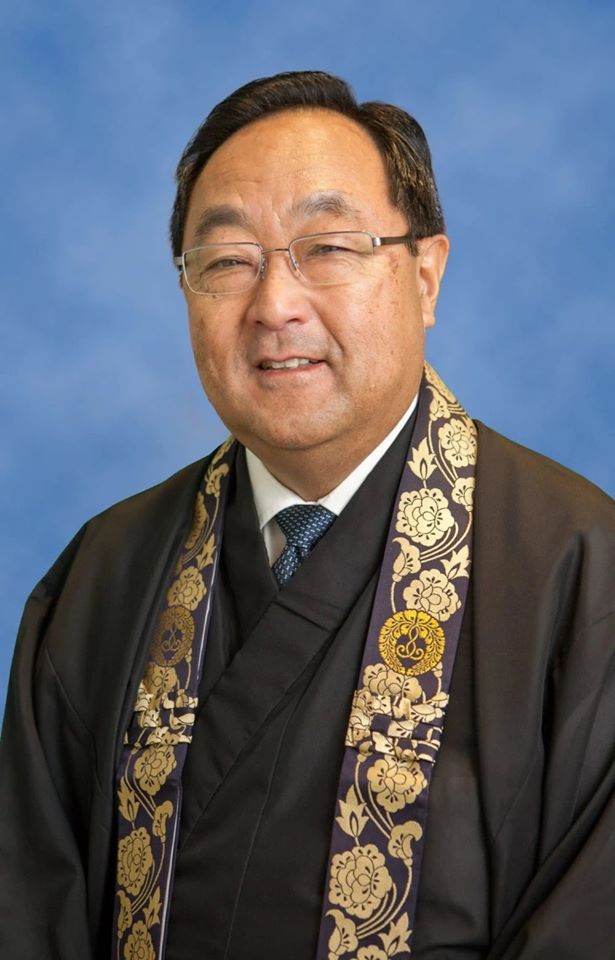
Message from Bishop Harada: Patience, Patience

PATIENCE, PATIENCE
Rev. Marvin Harada, Bishop

In Buddhism we have the teaching of the Six Paramitas, the six bodhisattva practices that carry us from this shore of samsara, to the other shore of truth or enlightenment. Today I would like to reflect on the second paramita, which is “patience.”

In Buddhism, we have to have patience in following the path. As they say, Rome wasn’t built in a day. We can’t expect to understand it all in a day or two. It takes time and patience. When young people first take a martial art, like Karate, right away they want to know, “How long will it take me to get my black belt?” It takes years to earn a black belt and it takes time to come to understand the heart of the Buddha-Dharma. How long you might ask? One year? Two years? Five years? I would say that it takes our whole life. Listening and learning in Buddhism is a lifelong enterprise. It is a lifelong undertaking.

The great Buddhist thinker, D.T. Suzuki, who is perhaps most responsible for introducing Buddhism to the west, when he was 95 years old, he had a five-year plan for what he wanted to study and research. For D.T. Suzuki, his study of the Dharma was a lifelong undertaking.

During this Coronavirus pandemic, I think that the word “patience,” takes on a new meaning. It feels like many people are reaching the “breaking point,” meaning that they are so sick and tired of being cooped up and not able to go out to restaurants, to bars, to stores, to the beach, that they are on the verge of exploding. Maybe that is why when about a week ago when they opened up the beaches in our area in Orange County, people flocked to the beaches.

This is a time in which as Buddhists, we can apply our teachings to help us face and endure this difficult, stressful, and anxious time. We can practice patience. We have to stick it out. We have to endure a little more this stay at home time, to help prevent the spread of the virus, or else it might become even more worse and deadly.

But it is not easy. Personally, I am dying to go to Las Vegas, but of course it is closed still. It seems like another lifetime ago that we went to Vegas and enjoyed the restaurants, the casino, and the shows. But we have to be patient, and we have to endure.

We might need to practice patience at home. Family members might be getting on each other’s nerves. Parents are trying to work from home, do home schooling for their kids, and not have any outlet of going out and getting away for a spell.

I heard a funny statement from someone who said, “Well, we haven’t killed each other yet,” and I know this was a joke, but we can all relate to that to some extent, can’t we? Truly, everyone’s patience is being tested during this shelter at home period.

I recall a wonderful quote from the novel, Siddartha, by Herman Hesse, which is a classic novel. In the novel, the main character, Siddartha, experiences renunciating the secular world, much like the historical Buddha did. During his time of religious practice, he didn’t have material things like a home, nice clothes, or three meals a day. But Siddartha said, “I can think. I can wait, and I can fast.” That was what he was able to do.

I cannot fast for even one day, but I think that all of us can do the other two, we can think, and we can wait. It might not be easy, but we can wait this out, we can practice patience. It might last a long time, but it won’t last forever. If we can wait, we will be able to endure it.

May we choose this time to practice patience, patience and more patience.

Namuamidabutsu,

Rev. Marvin Harada, Bishop, Buddhist Churches of America
Yard Volunteers Needed

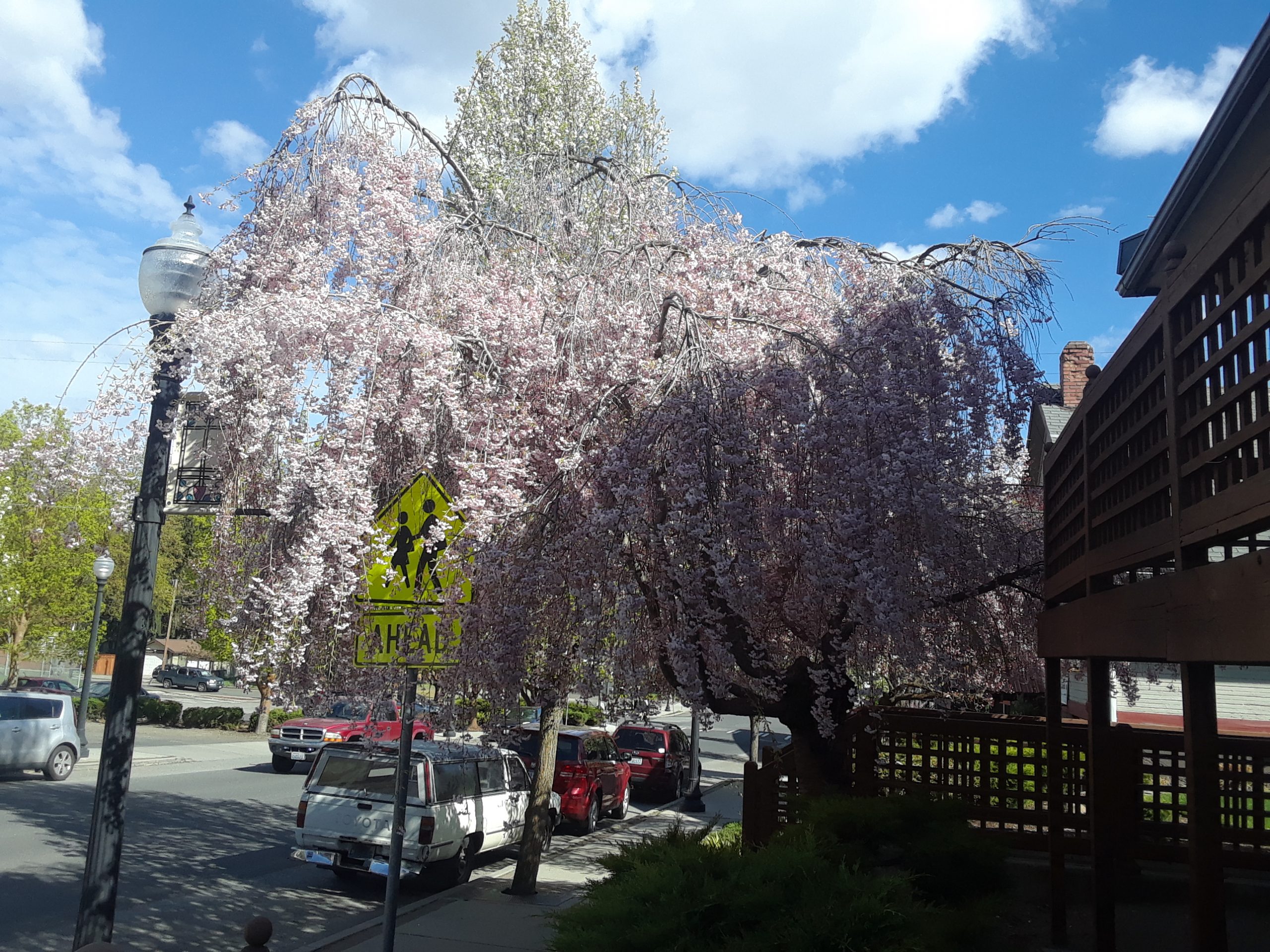
Hi everyone!    We are looking for volunteers to help with weeding and yard cleanup at the temple.   If anyone is interested please let me know.  We will practice social distancing and there will only be a few people working at a time.  Just email me at alwaysalotus@gmail.com or text 509-294-1461. Thanks.

—
In gratitude – Becca Opel
Board President

Rummage Sale

Are you spending your quarantine time de-cluttering your home and getting rid of attachments?

The temple has scheduled a RUMMAGE SALE sometime this summer, so if you find items you’d like to donate, we will be happy to store them for you once the quarantine is over.  

Donations Needed

While We Are Closed

We are grateful for the volunteers who have been maintaining the Temple and for the dues that members have been sending since we closed. We are awaiting word from the state and the BCA about when to re-open.

Donations: Since we stopped having services on Sundays, donations have been down. Please consider sending a donation, which will help keep our temple thriving and available for you and for future generations. Financial contributions are gratefully accepted by mail or you can make a secure donation using a credit card on our website (using PayPal).

Message from Reverend Harada

Transcending Worldly Wishes

We often chant the Juseige in our services. I love the first line of the Juseige. It goes, GA GON CHO SE GAN. Let me explain this one line from the Juseige.

To begin with, we have to know the context of the Juseige. The Juseige is a short song, or poem, that appears in the Larger Sutra of Immeasurable Life, one of the three main sutras of Shin Buddhism. The sutras are the sermons of Shakyamuni Buddha.  In this particular sutra, Shakyamuni Buddha tells a profound story to express his innermost heart of enlightenment. The hero of the story, the “Luke Skywalker,” if you will, of the Larger Sutra, is a Bodhisattva by the name of Dharmakara. Shakyamuni Buddha expresses his own heart through the fictional character of Dharmakara.

In the line, GA GON CHO SE GAN – Dharmakara expresses his deepest wish to first become a Buddha, an enlightened one, and second, as a Buddha, to liberate, or “save” all beings from a life of suffering, from the world of samsara.

This wish is something that transcends worldly wishes. In our unenlightened life, we have many “worldly” wishes. We might wish for a new car, or a bigger home, or maybe to win the lottery. Others might wish for their dream job, to meet the love of their life, or maybe to make a hole in one. There is nothing wrong with those wishes.  We all have them at various phases of our life.

But Dharmakara does not ask for such worldly wishes. Dharmakara specifically expresses a wish that “transcends,” that is “beyond” such worldly wishes. What does this mean?

Right now, with the Coronavirus, doctors, nurses, and medical staff are on the “front lines” of the battle in the war against this virus. Daily, they risk their own lives, exposing themselves to potentially getting it themselves, but yet they work to save the lives of others.

Let’s say that there are two nurses going to work at the hospital, Nurse A and Nurse B. Nurse A became a nurse because the pay was good and there was a demand for nurses. Nurse A goes to the hospital and thinks, “They give me too many patients to take care of. These doctors are too demanding. I should be getting paid more for all that I am doing. Gee, isn’t it quitting time yet? Oh no, four more hours on my shift.”

Nurse B, on the contrary, became a nurse because of a deep wish to heal the sick. Nurse B dives into work, helping this patient and that patient, helping this doctor and that doctor, working tirelessly throughout the day. Finally, at the end of the day, Nurse B looks at their watch and thinks, “Is it time to go home already? But there is still so many patients to care for. I will work a little more and then go home.”

Thankfully, we have many nurses and doctors like Nurse B, for whom their work is not just a job, but they are fulfilling their deep wish of life, to heal the sick, to care for the sick, to save lives.

Having a deep wish for your life can apply to any occupation. Right now, so many occupations are so important in keeping all of us safe and alive. Farmers aren’t raising crops just for the money, but they are feeding the world. Truck drivers are making it possible for us to receive the food in the stores. Store workers risk their lives to keep food and supplies on the shelves for all of us.

May we find our own deepest wish of life, something that transcends worldly wishes. When we discover that, then our life is always meaningful, always gratifying, and always fulfilling.

Namuamidabutsu,
Rev. Marvin Harada
Bishop
Buddhist Churches of America

Services Streamed

**See the April Newsletter for links to streamed services***

Many of the Temples are live streaming their services. Watch local services or explore the dharma being shared at temples and churches throughout the United States. By visiting a temple’s live-stream video page at the scheduled time, you are able to join service, chant and sing along, and listen to dharma messages from your home. Check temple websites to confirm weekly live stream schedules, as services may not be streamed every Sunday. Temples may also offer recordings of recent services or dharma talks, with many now posting new content on a weekly basis. We recommend you stream one of these services on Sunday.

The links to all of the services is on the Buddhist Churches of America site at: https://www.buddhistchurchesofamerica.org (click on the logo at the bottom of the page)

For example, you can see and hear these service at the Seattle Betsuin or the Tacoma Buddhist Temple at 10 am on Sunday and they are saved for later viewing:

Seattle Betsuin   youtube.com/seattlebuddhisttemple

Tacoma Buddhist Temple   youtube.com/channel/UCSjeUsyIkbG_e74q-CM1Sig

Oregon Buddhist Temple youtube.com/user/OregonBuddhistTemple